Friday, March 28, 2008

Wednesday, March 26, 2008
A tribute to Dr. G. C. Dev by Mohammad Abdur Rashid
THE government of
Dr. Dev was born on January 1, 1907 in the
He completed his BA (Hons) in philosophy with first class from the
His PhD thesis titled "Reason, Intuition and Reality" was later published as a book named Idealism and Progress. He carried out his PhD research under the late Dr. Savapalli Radhakrishnan, one of the most learned philosophers of
Dr. Dev started his academic career as a lecturer in philosophy in
In 1953, Dr. Dev became reader (now known as associate professor) in the Department of Philosophy and Psychology,
Dr. Dev had in-depth understanding of many branches of knowledge. He was an avid reader and great thinker. He was very good at public speaking, and gave scholarly and enlightening speeches, often extempore, on a range of topics that included Sufism and Muslim philosophy.
He was an idealist, and wrote a number of books on idealism. He used to call his philosophy "synthetic idealism," combining idealism, spiritualism and materialism. Some of his books are Idealism & Progress, Idealism: A New Defence and New Applications, Aspiration of the Common Man, Buddha-the Humanist, Parables of the East and My American Experience (the last two were published posthumously from
His understanding and thinking skills were incredibly high. He was also able to do lengthy and complex calculations without paper and pencil. We were often amazed at how quickly he was able to grasp what we had written, point out our mistakes and give his learned comments on what had taken us hours and days to write.
He used to narrate real life experiences to illustrate theory. Some of these narrations were often humorous, and contained practical lessons that I still remember today. He never belittled or ridiculed anyone, and was always respectful of others, irrespective of religion, ethnicity and social status. This was itself a critical value for us to learn and uphold for the rest of our lives.
I will always remember Dr. Dev for his simple, modest and self-effacing nature. I remember how he humorously commented on his own unassuming appearance while giving us an example of how appearance and reality may not always be the same.
During an official trip from Dinajpur to Dhaka, as the principal of the
Dr. Dev used to lead a simple life, residing in the small one-story official residence of the provost of Jagannath Hall. He was a life-long bachelor and lived with his adopted son Jyoti Prakash Datta. He also adopted a Muslim girl as his daughter. Dr. Dev was very non-communal in his outlook and used to love all of us very much. We benefited greatly from his affection and guidance. We never needed prior permission to see him at his office or residence, and could meet him anytime to discuss any matter. He always welcomed us warmly.
As far as I remember, he was a vegetarian. As the provost of Jagannath Hall, he used to be regularly invited to the monthly feasts and dinners in all the halls. I had the privilege of accompanying him to some of the feasts in my hall, Dhaka Hall. As he could not eat many items, he normally had a meal of muri mixed with mustard oil and onion before going to the official dinners. Often, he would make enlightening and humorous after-dinner speeches. The students and teachers of the department used to celebrate his birthday annually, when we used to have a cultural function in which we all participated. He enjoyed spending time with students and teachers very much. He was very much a man of the people -- always there for us.
Like many other teachers of
He was very particular about physical exercise. He used to a walk lot in the university area, and in the open space in front of his residence. We would often walk with him in this place and discuss our thoughts with him. He remained a mentor and guide for me till his untimely death.
Dr. Dev was a very selfless man, who dedicated his life to his university, colleagues and students. He was least interested in wealth. He founded the Bangladesh Philosophical Society and donated the only piece of land that he had in
Most importantly, Dr. Dev was a man of great human qualities. He had always treated students and colleagues in a spirit of equality. He never discriminated against anyone, whether they were from East Pakistan or
Dr. Kazi Kader worked at the
Dr. Dev, my teacher, was a man of simple living and high thinking. He neither had any political involvement nor political ambition. He was a humanist who concentrated on the pursuit and spread of knowledge. The Pakistani forces killed many great intellectuals of
The government's decision to award Dr. Dev the Independence Award posthumously is a praiseworthy and laudable decision. We mourn his death and celebrate the award today to a selfless man who contributed so much to our lives as well academic discipline. It is most unfortunate that he met an untimely death, but the knowledge, values and human qualities that he taught us remain relevant not only in our lives but also for our successive generations. May Allah grant eternal peace to his departed soul.
The author is Professor of Human Resource Management,
Wednesday, March 19, 2008
Catastrophe? What catastrophe? By Kamran Shafi
FIRST things first then, and straight to two statements that came out of the Pakistan Army within the past week, the first by the COAS himself who said that the Pakistan Army was “committed to the Kashmir cause in line with the aspirations of Pakistani [sic] nation”.
What was that please? How would GHQ know by itself what the aspirations of the Pakistani nation are, regarding anything at all? What mechanism does GHQ have to ascertain the aspirations of the Pakistani nation other than to follow in letter and spirit the directions and orders of the properly constituted Government of Pakistan?
For is it not a fact that the Pakistani nation has just last month gone to the polls and elected its representatives who will sit in parliament, throw up a government from amongst themselves, and get on with the business of governance? Should the Pakistan Army as just another department of the Government of Pakistan not hold itself at the disposal of the properly constituted government in which the Pakistani nation has reposed confidence and which therefore is the only arbiter of the people’s will and aspirations, no more no less?
The other statement was by the DG of the ISPR who said: “We have lodged a very strong protest with the coalition forces across the border” when asked about the death of two women and two children in an artillery/missile strike on the Pakistani village of Kangrai, North Waziristan.
Who is the “we”, please? Excuse me, but has the Pakistan Army now formally taken over running the country’s foreign relations? Is it not absolutely inappropriate for the army to be doing the protesting to a foreign entity, when the recognised convention is that the country’s government, in its foreign ministry, handles matters of state which have to do with other states?
Who are “coalition forces” anyway if not the US Army and the British Army augmented by barely token participation of some NATO countries? So why weren’t the ambassador of the United States and the High Commissioner for the United Kingdom summoned to the FO and a protest handed over to them?
Indeed, if the mere thought of summoning the American ambassador gives heart attacks to the ‘core-professionals’ who loll about in the Hotel Scheherezade, a third secretary of the American embassy could have been summoned to the FO. The point should have been made. The ‘coalition’, in its turn, should have apologised for the loss of innocent life.
But no; all Major Chris Belcher, its spokesman, had to say was: “We can confirm a precision-guided ammunition strike on March 12 on a compound connected with [the] Haqqani network 1.5 kilometres across the border in Pakistan…. I do not have any information on any casualties that may have occurred … the information I have is that the Government of Pakistan was notified immediately following the strike.” Full stop.
Clinical, cold, arrogant. But why doesn’t the ‘coalition’ understand that this kind of behaviour only makes America more enemies? How, indeed, does contriteness for a wrong committed in America’s name take anything away from it? Does one have to be an Einstein to understand that the Commando is today a much-reviled man for precisely this sort of behaviour?
And now to catastrophe. The Commando said in an interview with The Washington Times, again during the last week, which should go down in the history of the country as a week in which some of the most ludicrous statements were made: “Can you imagine what the effect would be on the business community, both foreign and domestic, or in the capitals of nations allied with us in the war on terror if the first thing they saw after this election was a political war between the presidency and the government? I think it would be catastrophic.”
Strong words, what!? Catastrophic for whom? For the Commando if parliament impeaches him? Or for the country if the Commando dismisses the assemblies if they attempt to impeach him? Does he even know the meaning of the word catastrophic?
Variously: disaster; calamity; upheaval; devastation; ruin; misfortune; tragedy; cataclysm! Is the Commando in such desperate straits that he will lead the country to ruin and misfortune if he is impeached? That he will devastate it? And bring tragedy upon our heads? Well, what about his oft-repeated mantra of ‘Pakistan First’? Or was that a load of nonsense as we always thought it was?
No sirs; if you simply refuse to read the writing on the wall, please look into your Turkish coffee cups more intently. Or read your tea leaves more carefully. Time is up, sirs, surely and truly. Anything you do hence-forwards: try and break up the People’s Party by activating your not so sleepy sleeper cells within it; try to bad-mouth the Sharifs to the Americans; use 58-2(b), nothing’s going to work.
This brings me to the matter of the Americans again, and their quite foolish leaks to the effect that they don’t really trust Nawaz Sharif when it comes to battling terror. Indeed, media organs allied to them are insidiously leaking stories to the effect that Osama bin Laden was known to Nawaz, etcetera.
Well, the bin Ladens were also known to the Bushes, enough for tens of them to be spirited out of the United States just one day after 9/11 despite there being a complete ban on air traffic all across the country. Osama himself was known to every CIA and ISI chief worth his salt. So where’s the problem?
And who was trying to cosy up to the Lal Mosque cleric just prior to the election to solicit his support? Not Nawaz Sharif but Chaudhry Shujaat Hussain, the Commando’s fellow traveller who, hand in glove with him, misruled this country for well on six very long years during which terrorism went through the roof.
It is also known that they are going about trying to find out what others opposed to the Commando, Aitzaz Ahsan for one, think about the war on terror. Is this a silly question or is it a silly question! What else would any Pakistani think about the need to uproot terrorism from our country but that it should be uprooted yesterday? But not in the foolish and self-defeating ways adopted by the Commando and his tight buddies, the American administration. Terrorism will only be defeated when tackled in an intelligent way, as humanely as possible.
In the end may I ask that the March 23 parade be cancelled? What is the point of holding it, cowering in fear, inside the Sports Complex where last year’s tamasha was also held and held badly? It was a joke, actually, as this one will be, with just some armed forces officers and their families attending. In any case this is a time fraught with suspense and fear and suspicion as the Commando’s dark shadow looms over and out of the President’s Lodge, Rawalpindi Cantt, (once Army House), the Lord only knowing how his knee will jerk the next time round.
Bushism of the Decade: “The reason I keep insisting that there was a relationship between Iraq and Saddam and Al Qaeda is because there was a relationship between Iraq and Al Qaeda” — President George W. Bush; 2004.
Stop Press: A detailed Pentagon study, reported in the press on March 13, 2008: “confirms there was no direct link between Iraqi ex-leader Saddam Hussein and the Al Qaeda network, debunking a claim President George W Bush’s administration used to justify invading Iraq”. So there! This is our Commando’s ‘tight’ buddy! A liar, through and through.
kshafi1@yahoo.co.uk
What was that please? How would GHQ know by itself what the aspirations of the Pakistani nation are, regarding anything at all? What mechanism does GHQ have to ascertain the aspirations of the Pakistani nation other than to follow in letter and spirit the directions and orders of the properly constituted Government of Pakistan?
For is it not a fact that the Pakistani nation has just last month gone to the polls and elected its representatives who will sit in parliament, throw up a government from amongst themselves, and get on with the business of governance? Should the Pakistan Army as just another department of the Government of Pakistan not hold itself at the disposal of the properly constituted government in which the Pakistani nation has reposed confidence and which therefore is the only arbiter of the people’s will and aspirations, no more no less?
The other statement was by the DG of the ISPR who said: “We have lodged a very strong protest with the coalition forces across the border” when asked about the death of two women and two children in an artillery/missile strike on the Pakistani village of Kangrai, North Waziristan.
Who is the “we”, please? Excuse me, but has the Pakistan Army now formally taken over running the country’s foreign relations? Is it not absolutely inappropriate for the army to be doing the protesting to a foreign entity, when the recognised convention is that the country’s government, in its foreign ministry, handles matters of state which have to do with other states?
Who are “coalition forces” anyway if not the US Army and the British Army augmented by barely token participation of some NATO countries? So why weren’t the ambassador of the United States and the High Commissioner for the United Kingdom summoned to the FO and a protest handed over to them?
Indeed, if the mere thought of summoning the American ambassador gives heart attacks to the ‘core-professionals’ who loll about in the Hotel Scheherezade, a third secretary of the American embassy could have been summoned to the FO. The point should have been made. The ‘coalition’, in its turn, should have apologised for the loss of innocent life.
But no; all Major Chris Belcher, its spokesman, had to say was: “We can confirm a precision-guided ammunition strike on March 12 on a compound connected with [the] Haqqani network 1.5 kilometres across the border in Pakistan…. I do not have any information on any casualties that may have occurred … the information I have is that the Government of Pakistan was notified immediately following the strike.” Full stop.
Clinical, cold, arrogant. But why doesn’t the ‘coalition’ understand that this kind of behaviour only makes America more enemies? How, indeed, does contriteness for a wrong committed in America’s name take anything away from it? Does one have to be an Einstein to understand that the Commando is today a much-reviled man for precisely this sort of behaviour?
And now to catastrophe. The Commando said in an interview with The Washington Times, again during the last week, which should go down in the history of the country as a week in which some of the most ludicrous statements were made: “Can you imagine what the effect would be on the business community, both foreign and domestic, or in the capitals of nations allied with us in the war on terror if the first thing they saw after this election was a political war between the presidency and the government? I think it would be catastrophic.”
Strong words, what!? Catastrophic for whom? For the Commando if parliament impeaches him? Or for the country if the Commando dismisses the assemblies if they attempt to impeach him? Does he even know the meaning of the word catastrophic?
Variously: disaster; calamity; upheaval; devastation; ruin; misfortune; tragedy; cataclysm! Is the Commando in such desperate straits that he will lead the country to ruin and misfortune if he is impeached? That he will devastate it? And bring tragedy upon our heads? Well, what about his oft-repeated mantra of ‘Pakistan First’? Or was that a load of nonsense as we always thought it was?
No sirs; if you simply refuse to read the writing on the wall, please look into your Turkish coffee cups more intently. Or read your tea leaves more carefully. Time is up, sirs, surely and truly. Anything you do hence-forwards: try and break up the People’s Party by activating your not so sleepy sleeper cells within it; try to bad-mouth the Sharifs to the Americans; use 58-2(b), nothing’s going to work.
This brings me to the matter of the Americans again, and their quite foolish leaks to the effect that they don’t really trust Nawaz Sharif when it comes to battling terror. Indeed, media organs allied to them are insidiously leaking stories to the effect that Osama bin Laden was known to Nawaz, etcetera.
Well, the bin Ladens were also known to the Bushes, enough for tens of them to be spirited out of the United States just one day after 9/11 despite there being a complete ban on air traffic all across the country. Osama himself was known to every CIA and ISI chief worth his salt. So where’s the problem?
And who was trying to cosy up to the Lal Mosque cleric just prior to the election to solicit his support? Not Nawaz Sharif but Chaudhry Shujaat Hussain, the Commando’s fellow traveller who, hand in glove with him, misruled this country for well on six very long years during which terrorism went through the roof.
It is also known that they are going about trying to find out what others opposed to the Commando, Aitzaz Ahsan for one, think about the war on terror. Is this a silly question or is it a silly question! What else would any Pakistani think about the need to uproot terrorism from our country but that it should be uprooted yesterday? But not in the foolish and self-defeating ways adopted by the Commando and his tight buddies, the American administration. Terrorism will only be defeated when tackled in an intelligent way, as humanely as possible.
In the end may I ask that the March 23 parade be cancelled? What is the point of holding it, cowering in fear, inside the Sports Complex where last year’s tamasha was also held and held badly? It was a joke, actually, as this one will be, with just some armed forces officers and their families attending. In any case this is a time fraught with suspense and fear and suspicion as the Commando’s dark shadow looms over and out of the President’s Lodge, Rawalpindi Cantt, (once Army House), the Lord only knowing how his knee will jerk the next time round.
Bushism of the Decade: “The reason I keep insisting that there was a relationship between Iraq and Saddam and Al Qaeda is because there was a relationship between Iraq and Al Qaeda” — President George W. Bush; 2004.
Stop Press: A detailed Pentagon study, reported in the press on March 13, 2008: “confirms there was no direct link between Iraqi ex-leader Saddam Hussein and the Al Qaeda network, debunking a claim President George W Bush’s administration used to justify invading Iraq”. So there! This is our Commando’s ‘tight’ buddy! A liar, through and through.
kshafi1@yahoo.co.uk
How we judge the thoughts of others
How we judge the thoughts of others
Brain division could help explain stereotyping, religious conflict and racism.
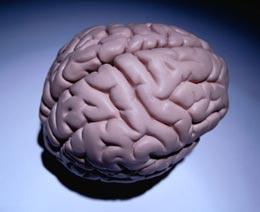 What are you thinking? We use different bits of our brain to think of ourselves and people 'not like us'.
How do we know what another person is thinking? New research suggests we use the same brain region that we do when thinking about ourselves � but only as long as we judge the person to be similar to us.
When second-guessing the opinions and feelings of those unlike ourselves, this brain region does not get involved, the new research shows. This may mean we are more likely to fall back on stereotyping � potentially helping to explain the causes of social tensions such as racism or religious disputes.
Neuroscientists led by Adrianna Jenkins of Harvard University in Cambridge, Massachusetts, made the discovery when trying to deduce how the brain weighs up the thoughts of others. As Jenkins explains, judging how others are feeling is a valuable social skill, because we have no way of seeing inside another person's head. "How do we go about bridging the gap between our minds and others' minds?" Jenkins asks.
The answer seems to be that it depends on whether we feel we identify with that person or not, Jenkins says. In other words, how our brain handles the question of someone's attitude to anything, from traffic jams to impressionist art, depends entirely on how we feel we relate to them as a person.
Similar tastes
Jenkins and her colleagues studied a brain region called the ventral medial prefrontal cortex (vMPFC), which is known to be involved in thinking about oneself. If you are asked, for example, whether you like baseball, this brain region will kick into life as you reflect on your love (or not) of the sport.
To find out what happens when considering the opinions of others, the researchers introduced college students from the Boston area to photographs and descriptions of similar and dissimilar people � either a fellow liberal student from the northeast, or a Republican-voting fundamentalist from the Midwest. They then asked the students to answer a range of questions, such as "do you like mushrooms on pizza?", and guess the responses of the two fictitious people.
�We might be seeing dissimilar others as less human.�
Adrianna Jenkins
Volunteers showed vMPFC activity when weighing up the opinions of those from similar backgrounds, the researchers report in Proceedings of the National Academy of Sciences 1. When considering the pizza preferences of the dissimilar person, this brain region did not come into play.
"The more you consider the other person like yourself, the more you empathize with them," Jenkins explains. "We might be seeing dissimilar others as less human," she suggests.
Social conflict
Although the questions in the study were deliberately apolitical, the results might nonetheless shed light on social conflicts between groups of people who view each other as very different, Jenkins says.
Psychological theory suggests that another way to deduce the feelings of others, without reference to one's own feelings, is to rely simply on social assumptions. This, she suggests, might be the cause of racial or religious tensions.
"It's quite plausible that we use stereotypes for people dissimilar to ourselves," says Jenkins. "Whether that's useful or detrimental is an open question."
Jenkins and her colleagues are now investigating this effect using people from different races, to see whether they get the same results. So far they have chosen volunteers from white and oriental backgrounds � using racial groups with a history of tension, such as Israelis and Palestinian Arabs, may change the results, she says.
However this research pans out, there is hope for creating stronger empathy with people unlike ourselves. Other research by Jenkins and her team suggests that you can 'put yourself in another's shoes' fairly effectively by simply spending five minutes writing about them in the first person � perhaps suggesting that you really can see another person's point of view if you try.
Tuesday, March 18, 2008
Monday, March 17, 2008
Gandhi in the pavilion - Sagarika Ghose
Source: The Hindustan Times
Two young Indian men are on a unique journey. Rahul Gandhi, 37-year-old MP from Amethi and bearer of India's most important political surname has just returned after racing around Orissa on his 'Discover India' tour assuring tribal elders that he is their 'sipahi' in Delhi. And Mahendra Singh Dhoni, 27-year-old superstar captain of the Indian cricket team has returned home in triumph, heading into a hysterical welcome in Ranchi where thousands thronged his home.
Last year, when Rahul Gandhi was inducted into the Congress as general secretary, party spokesperson Abhishek Manu Singhvi said that Rahul was the Congress's Dhoni. Just as Dhoni had at that time led a young Indian team to victory in the Twenty20 World Cup in South Africa, so too Rahul would galvanise the Congress Twenty20 for a victory in 2009.
Yet the Congress spokesperson perhaps failed to appreciate an important difference between Rahul Gandhi and Mahendra Singh Dhoni. Rahul and Dhoni are in the same generation, yet they illustrate two very different faces of contemporary India.
One is a representative of his undoubtedly exceptional family, trapped as well as enhanced by his surname, a member of a political party that is finding it increasingly difficult to open its doors to new young talent precisely because of its reliance on members of premier families. The other represents a family-less universe of talented individuals, who have clawed their way up through a tough system, who learnt to be streetsmart by the time they were adolescents, who had no doting fathers or mothers by their side and no cadres of family loyalists to ease the pain of daily competition. Two spheres: one, where sons follow their family businesses and take them to new heights or fail to perform. And another sphere that is steadily growing and proving far more seductive to the youth: where family and fathers and legacy are irrelevant. The only thing that matters is raw talent and luminous skill.
In fact, the great Indian story of our times is precisely the story of the journey from nowhere to the stars. Be it in the career of Shah Rukh Khan or a Sunil Bharti Mittal or a Praveen Kumar or even a Mayawati or a Narendra Modi, what sets us apart from our feudal neighbours is this revolution of upward mobility. We are a country of the nouveau riche, living in the midst of a social revolution. When Indian politics finds its Barak Obamas, they will not come from the cautious young men carrying forward their family names. The Barak Obamas will come from dusty alleyways far away from the power drawing rooms, from the sweat of hard work and the passion for upwardly mobility and achievement. But does the Congress or Indian politics have the system to go out and find those talents, just as the Indian cricketing system has done? Not yet.
The Indian cricket team is a microcosm of India's social revolution and that's why it is the focus of such frenzied adulation. The frenzy and hysteria is not just about corporate sponsors, but also because someone like Praveen Kumar is the son of a Meerut constable whose father wanted him to become a pehalwan. Instead, he became a cricketer for India. It is because Manoj Tiwary is the son of a railway fitter and now wears the tricolour on his back. It is because Ishant Sharma's father ran an air-conditioner repair shop. And it is because Harbhajan Singh's father used to make screws and ball bearings at home to make a living for his family of five daughters and one son. And because that son has now become tough enough and talented enough to look a white man in the eye and even declare that one Sikh is equal to several thousand Australians. Dhoni's father was a junior engineer and Dhoni was born and brought up in Ranchi.
Compared to India's new-age cricketers, the young MPs of the Congress have never had to fight to measure up to equal competition. Rahul Gandhi is a well-intentioned and thorough technocrat-politician who always does his homework and never pushes himself forward. Yet, his public utterances are mostly centred around his family. He caused a furore in the Uttar Pradesh election campaign last year when he said that the break up of Pakistan was an achievement of his family. He also declared that if a Nehru-Gandhi had been in power, the Babri Masjid would not have been demolished, again a reference to his family. He has invoked his family name repeatedly on his recent trip to Orissa. He has remarked that at least the people of Orissa got to hear his father's last speech that he didn't and has inaugurated a park named after his father and even unveiled his father's statue. The Congress's belief that the Gandhi name is a 100-year-old brand and still sells among voters may not be mistaken, but on the other hand, India's youth icons are no longer upholders of family names.
Sociologist Ashis Nandy once said that there were four areas in Indian society where family and privilege did not matter and sheer talent was always rewarded. These areas were Bollywood, the stock market, organised crime and sports. Leaving aside organised crime, where the definition of 'talent' is perhaps subjective, in all three sectors, this is quite well borne out by examples. In Bollywood, the star sons who have become stars in their own right are those whose talent has been as great if not greater than their fathers, such as a Hrithik Roshan. Alas, the fate of Esha Deol or Tushaar Kapoor, also the offspring of talented parents, shows that family name no longer wins rewards as a matter of right. The Tata and the Ambani brands once again have been taken to new heights not because of a simple family name or blind loyalty to legacy, but because the legatees of the brands have reinvented and infused their legacies with new talent and a new direction as shown by Ratan Tata or the Ambani brothers.
Yet the Indian cricket team remains a foremost example of the meritocratic society, where the doors are swinging open to welcome talents from every corner of the country. By contrast, the Congress, and politics in general, is fast becoming monopolies of families where the captain's position is inherited rather than earned.
Instead of a four-day calculated tour to Orissa to invoke the family name and reiterate the aam aadmi commitment just after the farmer's budget, how much more electrifying it would have been if Rahul Gandhi had launched a padyatra throughout India for five years. Travelled third class, slept on platforms and instead of a single well-publicised night in the house of a Dalit, earned love and admiration throughout the land by choosing to actually live his life among those who loved his father and grandmother. Ah, we would have said then, another natural born leader from the Nehru-Gandhi family. Yes, the Congress has found its Dhoni, a young man who leads from the front and is reliant only on his own talents. But, alas, we can't say that yet.
Bye
Wednesday, March 12, 2008
The war of drones By Pervez Hoodbhoy
Dawn, March 9, 2008
DRONES, machine and human, have drenched Pakistan with the blood of innocents. On the one side are US-made drones such as the MQ-1B General Dynamics Predator ¡V a remote controlled, self-propelled, missile-bearing aerial system. On the other side are the low-tech human drones, armed with explosive vests stuffed with ball bearings and nails.
These lethal engines of destruction, programmed by remote handlers, are very different. But neither asks why it must kill, nor cares about the death and suffering it causes.
On Jan 13, 2006, a bevy of MQ-1Bs hovering over Damadola launched a barrage of ten Hellfire missiles at the village below. They blew up 18 local people, including five women and five children. Such cold statistics say nothing about the smashed lives of the survivors, or the grief of the bereaved. The blame was put on faulty local intelligence.
Then, on Oct 30, 2006, a Hellfire missile hit a madressah in Bajaur killing between 80-85 people, mostly students. Even if those killed were allegedly training to become Al Qaeda militants, and even if a few key Al Qaeda leaders such as Abu Laith al-Libi have been eliminated, the more usual outcome has been flattened houses, dead and maimed children, and a growing local population that seeks revenge against Pakistan and the US.
The human drone has left a far bloodier trail across Pakistani cities. From six suicide attacks in 2006, the tally went up to 62 in 2007. According to the South Asia Terrorism Portal, at least 1,523 civilians were killed in terror-related violence in 2007 and more than twice that number injured. The average is now more than one per week ¡V the last week saw three in a row. Those praying in mosques, imambargahs, or at funerals have been no safer than others at political rallies or while crossing a road.
It is possible to imagine how an American soldier or CIA operative controlling a Predator drone can distance himself from the death and destruction it causes in a remote country on the other side of the world that they imagine is full of enemies. For them, it is a job and a way to defend their country. What is harder to understand is how the Pakistani suicide bomber can kill people who are so close to him in so many ways.
A spine-chilling suicide bomber training video, one of the several videos that freely circulate in Pakistan's tribal areas, offers the beginning of an explanation. About 30 masked fighters are filmed in this video, speaking a language that is not any of Pakistan's regional languages, Arabic, or Persian. They are training in some barren, mountainous area. One fighter, randomly selected by their leader, proceeds to climb a huge rock, perhaps 100 feet high. He reaches the highest point, and then stands motionless. His arms are outstretched as though on a diving board. On a signal from the leader below, without hesitation, and without closing his eyes, he hurls himself into the void.
The camera cuts to the body lying on blood-soaked ground. It slowly pans over the faces of the other masked fighters. Their eyes betray no emotion. A second signal from the leader, and they trot military-style to the body, dig a shallow grave, toss their dead comrade into it, and cover it up. Then, amazingly, they march over the grave several times, chanting Quranic verses. This is astonishing, because to trample a grave is the ultimate mark of disrespect in a Muslim culture.
Why sacrifice a human life for a few minutes of footage? English sub-titles reveal that this is obviously a propaganda video. Its message: the group's fighters have overcome the fear of death, and have willingly surrendered their lives to the group leader, and their individual powers to reason and decide.
As troubling as the murders is the response of Pakistanis. While the murder of innocents by the MQ-1B has rightly led to condemnation in Pakistan, the even greater carnage by suicide bombers has provoked less criticism. Some editorials, mostly in English language newspapers, have been forthright. But there are few full-throated denunciations to be found in Urdu newspapers.
On the other hand, implicit justifications abound. In January 2008, 30 leading Deobandi religious scholars, while declaring suicide attacks "haram", rationalised these as a reaction to the government's misguided polices in the tribal areas. They concluded that "a peaceful demand for implementing Shariah was not only rejected but the government was also not willing to give ear to any reasoning based on the Quran and Sunnah in support of the Shariah demand. Apparently, these circumstances led some minds to the frustration that manifested itself in suicide attacks."
What are these ulema telling us? That we should adopt the Shariah to avoid being attacked? This amounts to encouragement and incitement, not condemnation of the suicide bombers' actions. But even civil society activists, who have bravely protested against the dismissal of the Chief Justice by Gen Musharraf, have not held any street protests against these ghastly crimes.
Why do so many Pakistanis who should know better suddenly lose their voice when it comes to condemning suicide bombings? Is it because the bomber kills in the name of Islam? Are people muted in their criticism lest they be regarded as irreligious or even blasphemous?
Or, is the silence political? Many choose to believe that the suicide bomber is a consequence of Pakistan's acquiescence to being America's junior partner in its war against terror. Conversely, there is a widespread opinion that suicide attacks will disappear if Pakistan dissociates itself from this war. But, few admit the brutal fact that even if America retreats or an elected government calls off the army, the terror of 'jihadism' will remain.
It is true that suicide bombings were a rarity in Pakistan until the army acted against Islamic militants in the tribal areas on US prodding. Army action against the Lal Masjid militants was another turning point. But the majority of today's dead and wounded are perfectly ordinary people. Many were pious Muslims, and some were killed in the act of prayer. They had absolutely nothing to do with American or Pakistani forces.
Even with evidence staring them in the face, most Pakistanis seem locked into a state of denial. They refuse to accept the obvious fact that more and more mullahs have created cults around themselves and exercise control over the lives of worshippers. An enabling environment of poverty, deprivation, lack of justice, and extreme differences of wealth is perfect for demagogues.
As the mullah's indoctrination gains strength, the power to reason weakens. The world of the follower becomes increasingly divided into absolute good and absolute evil. Doubt is replaced by certainty, moral sensibilities are blunted. Reduced to a mere instrument for murder, the human drone is left with no room for useless things such as judgment, doubt, or conscience. As other human beings become mere objects rather than people deserving of love and compassion, the metamorphosis from human to drone becomes complete.
The last thoughts of a suicide bomber cannot be known, but remorse or doubt is unlikely. There is no lower depth to which humans can fall to. Except, perhaps, those who control them ¡V and towards whom we still dare not point a finger at.
The writer teaches physics at Quaid-i-Azam University in Islamabad.
DRONES, machine and human, have drenched Pakistan with the blood of innocents. On the one side are US-made drones such as the MQ-1B General Dynamics Predator ¡V a remote controlled, self-propelled, missile-bearing aerial system. On the other side are the low-tech human drones, armed with explosive vests stuffed with ball bearings and nails.
These lethal engines of destruction, programmed by remote handlers, are very different. But neither asks why it must kill, nor cares about the death and suffering it causes.
On Jan 13, 2006, a bevy of MQ-1Bs hovering over Damadola launched a barrage of ten Hellfire missiles at the village below. They blew up 18 local people, including five women and five children. Such cold statistics say nothing about the smashed lives of the survivors, or the grief of the bereaved. The blame was put on faulty local intelligence.
Then, on Oct 30, 2006, a Hellfire missile hit a madressah in Bajaur killing between 80-85 people, mostly students. Even if those killed were allegedly training to become Al Qaeda militants, and even if a few key Al Qaeda leaders such as Abu Laith al-Libi have been eliminated, the more usual outcome has been flattened houses, dead and maimed children, and a growing local population that seeks revenge against Pakistan and the US.
The human drone has left a far bloodier trail across Pakistani cities. From six suicide attacks in 2006, the tally went up to 62 in 2007. According to the South Asia Terrorism Portal, at least 1,523 civilians were killed in terror-related violence in 2007 and more than twice that number injured. The average is now more than one per week ¡V the last week saw three in a row. Those praying in mosques, imambargahs, or at funerals have been no safer than others at political rallies or while crossing a road.
It is possible to imagine how an American soldier or CIA operative controlling a Predator drone can distance himself from the death and destruction it causes in a remote country on the other side of the world that they imagine is full of enemies. For them, it is a job and a way to defend their country. What is harder to understand is how the Pakistani suicide bomber can kill people who are so close to him in so many ways.
A spine-chilling suicide bomber training video, one of the several videos that freely circulate in Pakistan's tribal areas, offers the beginning of an explanation. About 30 masked fighters are filmed in this video, speaking a language that is not any of Pakistan's regional languages, Arabic, or Persian. They are training in some barren, mountainous area. One fighter, randomly selected by their leader, proceeds to climb a huge rock, perhaps 100 feet high. He reaches the highest point, and then stands motionless. His arms are outstretched as though on a diving board. On a signal from the leader below, without hesitation, and without closing his eyes, he hurls himself into the void.
The camera cuts to the body lying on blood-soaked ground. It slowly pans over the faces of the other masked fighters. Their eyes betray no emotion. A second signal from the leader, and they trot military-style to the body, dig a shallow grave, toss their dead comrade into it, and cover it up. Then, amazingly, they march over the grave several times, chanting Quranic verses. This is astonishing, because to trample a grave is the ultimate mark of disrespect in a Muslim culture.
Why sacrifice a human life for a few minutes of footage? English sub-titles reveal that this is obviously a propaganda video. Its message: the group's fighters have overcome the fear of death, and have willingly surrendered their lives to the group leader, and their individual powers to reason and decide.
As troubling as the murders is the response of Pakistanis. While the murder of innocents by the MQ-1B has rightly led to condemnation in Pakistan, the even greater carnage by suicide bombers has provoked less criticism. Some editorials, mostly in English language newspapers, have been forthright. But there are few full-throated denunciations to be found in Urdu newspapers.
On the other hand, implicit justifications abound. In January 2008, 30 leading Deobandi religious scholars, while declaring suicide attacks "haram", rationalised these as a reaction to the government's misguided polices in the tribal areas. They concluded that "a peaceful demand for implementing Shariah was not only rejected but the government was also not willing to give ear to any reasoning based on the Quran and Sunnah in support of the Shariah demand. Apparently, these circumstances led some minds to the frustration that manifested itself in suicide attacks."
What are these ulema telling us? That we should adopt the Shariah to avoid being attacked? This amounts to encouragement and incitement, not condemnation of the suicide bombers' actions. But even civil society activists, who have bravely protested against the dismissal of the Chief Justice by Gen Musharraf, have not held any street protests against these ghastly crimes.
Why do so many Pakistanis who should know better suddenly lose their voice when it comes to condemning suicide bombings? Is it because the bomber kills in the name of Islam? Are people muted in their criticism lest they be regarded as irreligious or even blasphemous?
Or, is the silence political? Many choose to believe that the suicide bomber is a consequence of Pakistan's acquiescence to being America's junior partner in its war against terror. Conversely, there is a widespread opinion that suicide attacks will disappear if Pakistan dissociates itself from this war. But, few admit the brutal fact that even if America retreats or an elected government calls off the army, the terror of 'jihadism' will remain.
It is true that suicide bombings were a rarity in Pakistan until the army acted against Islamic militants in the tribal areas on US prodding. Army action against the Lal Masjid militants was another turning point. But the majority of today's dead and wounded are perfectly ordinary people. Many were pious Muslims, and some were killed in the act of prayer. They had absolutely nothing to do with American or Pakistani forces.
Even with evidence staring them in the face, most Pakistanis seem locked into a state of denial. They refuse to accept the obvious fact that more and more mullahs have created cults around themselves and exercise control over the lives of worshippers. An enabling environment of poverty, deprivation, lack of justice, and extreme differences of wealth is perfect for demagogues.
As the mullah's indoctrination gains strength, the power to reason weakens. The world of the follower becomes increasingly divided into absolute good and absolute evil. Doubt is replaced by certainty, moral sensibilities are blunted. Reduced to a mere instrument for murder, the human drone is left with no room for useless things such as judgment, doubt, or conscience. As other human beings become mere objects rather than people deserving of love and compassion, the metamorphosis from human to drone becomes complete.
The last thoughts of a suicide bomber cannot be known, but remorse or doubt is unlikely. There is no lower depth to which humans can fall to. Except, perhaps, those who control them ¡V and towards whom we still dare not point a finger at.
The writer teaches physics at Quaid-i-Azam University in Islamabad.
Monday, March 03, 2008
Sunday, March 02, 2008
Venezuela: Socialism from below - anon
The right wing inside
From the early days of the “Bolivarian revolution”, Resistance, a socialist youth organisation in
An unfolding revolution gives socialists in
Chavez was originally elected in 1998. At that time he was not talking about a socialist revolution, but was instead campaigning to introduce modest reforms to lift people out of poverty, through providing basic education and improving health care, and combatting corruption. The rigid opposition to this plan from big business, the media and state bureaucrats led Chavez to realise that the Venezuelan capitalist class would never willingly allow these reforms if it meant damaging corporate profits.
This fight to introduce reforms began to radicalise Chavez and other people throughout the country who had been promised change. They came to understand the whole system would have to be transformed if the Bolivarian project was to be realised in full.
In the November 2006 edition of its magazine, SAlt claimed that what is happening in
Yet it was Chavez who in 2005 called for a national discussion of socialism; prior to this, there had been no mass support for socialism. Chavez went to the polls in the December 2006 elections on an explicitly socialist platform, promising to deepen the revolution. He was subsequently returned with an even bigger majority.
However, by himself Chavez cannot transform the country. To say that the Venezuelan revolution has been made “from above” misses the role that the masses of Venezuelan people have played in creating and defending the revolution.
The social missions have all been carried out by people themselves. The eradication of illiteracy, for example, was achieved through thousands of young people being recruited to go door-to-door in every street to organise classes to teach people how to read and write. The missions facilitate people’s organisation and self-confidence to struggle.
The 2002 US-backed coup failed because the millions of people who voted for Chavez came out onto the streets to demand the return of their government. Chavez has continually encouraged the involvement of the majority of people in politics. The explosion in the number of communal councils is one way doing this. These councils, based on a few hundred families in a particular neighbourhood, have direct access to funding and control of social programs in their area. There are now some 19,000 of them. There are plans to introduce workers’ councils to facilitate workers’ control over production.
It is true that the introduction of free health care and education are not by themselves socialist. A socialist system involves taking the power away from big business, unelected bureaucrats and profit-friendly politicians and putting it directly in the hands of working people, and replacing a profits-first economy with a democratically controlled one that will put the interests of workers and the protection of the environment before the interests of the corporate elite.
People will be able to make decisions about the issues that affect them, whether it is in their neighbourhood, or workplace or school. Socialism will, for example, eliminate the incongruity of a government taking a country to war when the majority of people are opposed.
A socialist society can only be constructed by working people themselves because it is a direct threat to the interests of the super-rich minority that control the big corporations — they aren’t going to give up their privileges without a fight.
SAlt members, who like Chavez claim to support Trotsky’s ideas, should ask themselves: If you wanted to hold back the self-emancipation of working people, as they claim Chavez does, why would you combine calls for workers to take power into their own hands with encouragement to study the ideas that teach workers how to carry this out.
This is a process full of contradictions, like any revolution. SAlt asks how
It is contradictory for SAlt to attack the revolution for being “from above”, but then turn around and attack Chavez for not introducing more radical measures. However, as Chavez has said, “if people want to take control of a factory then constitutionally they don’t have to wait for me to do it”.
There are many challenges for the revolution. The economic and social weight of
Within the revolutionary movement there are real debates at the moment about what “socialism for the 21st century” means for
The Venezuelan revolution does not fit into the pre-arranged idea SAlt has of what a socialist revolution will look like when it happens, so they argue in their November 2006 article that Chavez “will likely act as a brake on workers’ attempts to build socialism from below”. Yet where is the evidence of Chavez holding back the rights or organisation of workers? SAlt has decided in advance that the revolution is bound to fail.
Resistance does not blindly support everything Chavez or his government does. However,
Socialism is no historic blunder - By V.R. Krishna Iyer
Socialists of India, unite! You have nothing to lose except a few crypto-capitalist super-pragmatic Marxists. You have a creative crimson destiny to gain and a billion-strong have-not humanity to win. Why then, do you, comrades of Marxian vintage, hug capitalist sorceries? With a plethora of Socialists, Communists, Marxists willing to join the long march to "Purna Swaraj," our democratic republic can become self-reliant without alien investment. But this prospect is being debased by tycoons, "Westoxicated" investment-operators and nascent neo-Marxist innovators who have surrendered to consumerism. A dangerous class has thus emerged with the dominant doctrine that money is more than man. The dazzle of globalisation, liberalisation, privatisation matters more to them than the rights of women, children, workers and peasants.
Our culture of Swaraj puts humanity above commodity, sober, enlightened values above greedy glamour. Gandhiji once wrote, "In so far as we have made modern materialistic craze our goal, so far are we going downhill in the path of progress."
The hidden agenda of the capitalist North is to capture the resources of India, debunk its socialistic ambition and turn it into a mere marketplace and banana republic. The founding fathers of our Constitution had on the other hand envisioned an economic democracy, a socialistic polity, a people's sovereignty.
My critique of the Marxist policy-novelty has to be viewed in this background. The CPI(M), which wields state power, participates in elections, sits in the House and tells its cadre to work for a socialist transformation, is destroying its own foundational militancy. India's human capital can outstrip the monetary investments by the capitalist class which wants to rob labour from the jobless have-nots and the deprived sectors. We want radical humanism and revolutionary patriotism to pool all available talent and bring about a social change for the happiness of the lowliest. Imperialism and unbridled foreign investment have undermined the lot of our poor, devalued our Constitution and sapped the very soul of our Swaraj. It is a mistake to think that socialist transformation is an idle dream, and that MNC big business is the only pragmatic strategy without an alternative.
Kerala and West Bengal have had Marxist governments for decades.
Capitalists, native and foreign, have had considerable hold over our
national economy; and for nearly 20 years the American pressure on our
country's governance has pulverised our noble traditions and social
grace. No serious socialist policy has been tried by any state. My
experience as minister, under E.M.S. Namboodiripad in 1957, convinced
me that people, whichever their party (or even if they do not belong
to any party), NGOs and bureaucrats are willing to toil free for
community development. Speaking generally, since 1991, the national
economy has been noxiously contra-Constitutional and anti-people. On
this, let me quote Shashi Tharoor: "India annually gets richer by $200
billion. India's foreign resources have exceeded $140 billion.
Remember, the country had to mortgage its gold in London because the
foreign exchange coffers were dry! In the list of the world's
billionaires, 27 of the world's richest people are Indian, most of
them staying in India. A large portion of the world's poorest people
live in India too and you don't need to go to Davos to meet them. Our
country's poor live below a poverty line that seems to be drawn just
this side of the funeral pyre. 250 million people living in conditions
that are a blot on our individual collective conscience is too grave a
matter to be lightly dismissed (The Tiger Elephant, the Tiger and the
Cellphone, P-6)
I was taken aback when Buddhadeb Bhattacharjee, reportedly successful
as West Bengal chief minister, declared that he was running a
capitalist government. He thus ignored the fact that rural West Bengal
had developed as a great paradigm with people's participation and
socialistic perspective that were far removed from a feudal society.
And I was stunned when the great Jyoti Basu �" the Marxist leader who
for long had inspired his people and many like me by his leftist,
simple genius �" strangely reversed gear, jettisoned his party
fundamentals and abandoned socialism as impractical. The Indian
Constitution always had a socialist bias and the Planning Commission
had been set up to work out a socialistic pattern of society. Banks
were nationalised, big hydel and irrigation schemes were set up, land
reforms and urban land ceiling laws were enacted, public sector
industries were built. These were not capitalistic moves, but
socialistic.
After all, Nehru, in the Constituent Assembly had asserted, "We have
given the content of democracy in this Resolution and not only the
content of democracy but the content, if I may say so, of economic
democracy. Well, I stand for Socialism, I hope, India will stand for
Socialism and that India will go towards the constitution of a
Socialist State."
Many parties and Parliaments have governed the country. The words "We,
the People of India" and "Socialist Secular Democratic" have survived
all these years. Every President or minister ever in power, or judge
on the bench has taken his or her oath of office pledging to uphold
those very words of the Constitution which sustain our Republic. Jyoti
Basu and Buddhadeb Bhattacharjee took office after taking the oath to
uphold this "Socialist Secular Democratic" state. How can they now
betray it after gaining state power? It was perhaps anticipating such
future deserters, that Karl Marx in his letter to Engels had written:
"All I know is that I am not a Marxist."
Please remember the Marxian mandate: "The philosophers have only
interpreted the world in various ways; the point is to change it."
The only hope the Indian masses have is the socio-economic freedom
from feudal-colonial submissiveness. Will the Marxists renege on this?
I am aware that a crimson economy will not be born tomorrow.
But I am equally aware that a powerful cooperative movement, a
large-scale public sector, a just land ownership with limited ceiling,
a nationalisation policy, workers' organised farm policy and
industrial-marketing economy can today become a reality, given the
will and the vision.
Do you have faith in people's participation? I have. Corruption has
ruined Indian politics. The capitalist alternative is
industrialisation, mafia menace, market racket, hospital terrorism,
hotel "star wars," slum slavery and freebooter robbery.
Justice V.R. Krishna Iyer is a former judge of the Supreme Court
Friday, February 29, 2008
Tuesday, February 19, 2008
Tehelka:: Free. Fair. Fearless - Dr. Vinayak Sen
Tehelka:: Free. Fair. Fearless
The Doctor, The State, And A Sinister Case
The untenable imprisonment and victimisation of Dr Binayak Sen, a heroic humanitarian from Chhattisgarh, exposes Indian democracy as increasingly hollow, says SHOMA CHAUDHURY. Photographs by SHAILENDRA PANDEY
FAR AWAY from the glittering salons of Bombay and Delhi, away from its obsessions with booming malls and plummeting stocks, a good man waits in jail. He’s
 |
| Doctor Love: Binayak talks urgently of famine and inclusive growth through iron bars |
been in for nine months. But it is unlikely that the story of Dr Binayak Sen would have caught your attention. He’s been written about in bits. Some channels have covered him. But even though he is a mesmeric character — intense, articulate, idealistic, a man of privilege who seeks nothing for himself — and his imprisonment is a scandal that should shame any civilised society, for the most part, news of him here has been overwhelmed by hotter media preoccupations. Lead India competitions. And polls on who should be awarded Indian of the Year. Shah Rukh, Manmohan, or Vijay Mallya? Men like Dr Binayak can wait their turn in jail.
The story of Binayak Sen is the story of the dangerously thin ice India’s democratic rights skim on. The story of every dangerous schism in India today: State versus people. Urban versus rural. Unbridled development versus human need. Blind law versus natural justice. It is the story of an India unraveling at the seams. The story of unjust things that happen — unreported — to thousands of innocent people, the story of unjust things waiting to happen to you and me, if we ever step off the rails of shining India to investigate what’s happening in the rest of the country. Most of all, it is the story of what can be done to ordinary individuals when the State dons the garb of being under siege.
But, first the facts of the story.
 |
| Absences: Binayak's wife, Ilina, daughter, Prantik, and mother-in-law at home, in Raipur |
A paediatric doctor by profession — a gold medallist, in fact, from the prestigious Christian Medical College (CMC) in Vellore — Binayak Sen, 56, has worked for more than 30 years with the tribal poor in Chhattisgarh, battling malnutrition, tuberculosis, and the lethal falciparum malaria strain rampant in the area. As a young man — star pupil with the world at his feet — he had turned his back on the many rich career options before him to take a job at a rural medical centre in Hoshangabad run by Quakers, where he was greatly influenced by Marjorie Sykes, Gandhi’s biographer. Ideas of public health, sustainable development and a just society obsessed him. Walking the slums of Vellore as a graduate, he had understood very early that there is a crucial link between livelihood, living conditions and health. Bolstering this with a degree in social medicine from JNU, Delhi, he moved from Hoshangabad to Chhattisgarh in 1981, to work with Shankar Guha Niyogi, the legendary mine workers’ unionist. Here, famously, he helped set up the Shaheed Hospital at Dallirajhara, built from the workers’ own mo - ney. Later, he moved away to the Mission Hospital in Tilda, and then, in 1990, joined his wife, Ilina Sen in Raipur, to set up Rupantar, an NGO through which the couple have worked for the last 18 years in training village health workers and running mobile clinics in remote outposts.
Drive 150 kilometres away from Raipur into the unforgiving dustiness of the forest around Bagrumala and Sahelberia in district Dhamtari, where Binayak ran his Tuesday clinic, and the heroic dimension of his work overwhelms you. There is nothing that could have brought a retired colonel’s elite, accomplished son here but extraordinary compassion. Scratchy little hamlets, some no more than 25-houses strong. Peopled by Kamars and other tribals, the most neglected of the Indian human chain, destituted further by the Gangrail dam on the Mahanadi river. No schools. No drinking water. No electricity. No access to public health. And increasingly, no access to traditional forest resources. Here, stories of Binayak Sen proliferate. How he saved young Lagni lying bleeding after a miscarriage, how he rescued the villagers of Piprahi Bharhi jailed en masse for encroaching on the forest, how he helped Jaheli Bai and Dev Singh, how he helped create grain banks. “Do something. Save the doctor,” says an old man in Kamar basti. “We have no one to go to now.”
OVER THE YEARS, Binayak’s medical work had morphed into social advocacy — the two umbilically linked in a state like Chhattisgarh. As Dr Suranjan Bhattacharji, director, CMC Vellore, says, “Binayak walked the talk. He was an inspiration for generations of doctors. He stirred us. He reminded us that it takes many things — access, freedom, food security, shelter, equity and justice — to make a healthy society. He was the alternative model.” In 2004, CMC honoured Binayak with its prestigious Paul Harrison Award. In a moving citation, it said, “Dr Binayak Sen has carried his dedication to truth and service to the very frontline of the battle. He has broken the mould, redefined the possible role of the doctor in a broken and unjust society, holding the cause much more precious than personal safety. CMC is proud to be associated with Binayak Sen.”
Yet, barely three years later, on May 14, 2007, in a Kafkaesque twist, the State pressed a button and deleted Binayak Sen’s long and dedicated history as a humanist and doctor. The police arrested him as a dreaded Naxal leader and charged him with sedition, criminal conspiracy, making war against the nation, and knowingly using the proceeds of terrorism (sic). Imagine the bewilderment. “Just a namesake doctor” the prosecution asserted, and with that act of wilful cynicism, a life of soaring vision and service was extinguished. Reduced to the rubble of the Indian justice system.Since Binayak was arrested, three courts have denied him bail, most damagingly, the Supreme Court on December 10, 2007 — International Human Rights Day: an ironic detail. In this august court, Gopal Subramaniam, Additional Solicitor General of India and counsel for the Chhattisgarh government, argued that the Indian State was investigating terrorism in Bihar, Chhattisgarh, Andhra Pradesh and Maharashtra and Binayak Sen was not only a part of this network of terrorism, but a key figure in the web. Granting him bail would jeopardise the health of the nation. The evidence available to back this claim would make dishonest men blanch, and honest men weep.
Sometimes the true measure of people is revealed in the small, random remarks of those who know them. When the Supreme Court denied him bail, an old man told an activist at a rally for Binayak, “If the courts are not going to free our doctor, should we storm the jail?” Then he continued ruefully to himself, “But what’s the use? All the other prisoners would run away, but Dr Binayak would stay back.”
DESPITE THIS formidable reputation, nothing has succeeded in bailing out Binayak Sen. Not affidavits by doctors from AIIMS and CMC who, inspired by Binayak, left cash-rich urban jobs to start the rural Jan Swasth Sahyog medical centre in Ganyari. Not 2000 signatures of doctors across the world. Not Binayak’s years in the Medico Friends circle. Not his stints as a member of the government’s own advisory committee on public health, not his pioneering work in creating the Mitanin health workers programme. Not even the fact that he voluntarily ret urned from Kolkata, where he was visiting his mother, to Raipur to confront the police about what he thought was a “simple misunderstanding”. In a crushing irony, on 31 December 2007, seven months after he was arrested, the Indian Academy of Social Sciences conferred the R.R. Keithan Gold Medal on Binayak. Its citation said, “The Academy recognises the resonance between the work of Dr Binayak Sen in all its aspects with the values promoted by Mahatma Gandhi, the Father of the Nation.”
Reasonable, one supposes, to incarcerate such a man in jail. As Vishwa Ranjan, the Director General of Police, Chhattisgarh, says, “So what? One can be a humanist and idealist and still be a Maoist.” You could safely take his to be the wise voice of the State.
The most pressing question then, why was Binayak Sen arrested? What catalysed the catastrophic switch of identities that has overtaken his life? The surface details first.
PIECES IN A PARANOID JIGSAW Going by available evidence, the three main actors in the police’s case against Dr Binayak Sen have very little in common, except ordinary human transactions. However, an atmosphere of dread has been built around them by booking them under the draconian Unlawful Activities Prevention Act and Chhattisgarh Special Security Act |
BINAYAK SEN With a track record of 30 years of social advocacy |
NARAYAN SANYAL Arrested in Andhra Pradesh in 2006, Narayan |
PIYUSH GUHA
|
 and medical service behind him, Binayak Sen stuck by his sense of duty and intervened to get legal and medical aid for Narayan Sanyal, an old Naxal ideologue in Raipur jail, even though he knew it was like entering the “lion’s mouth.” He was arrested for this on May 14, 2007. He is still in jail
 Sanyal was let off on bail. He was then arrested by the Chhattisgarh police on a murder charge. Sanyal’s brother asked Binayak to help him get attention for a painful condition in his hand. Though every visit was officially sanctioned, the police now allege Sen was acting as an illegal courier
 Piyush Guha is a tendu patta businessman from Kolkata. Known to Sanyal’s elder brother, he was carrying Rs 49,000 as fees to be delivered to Binayak and handed to the lawyer. The police produced him on May 6, 2007 with 3 letters on him, allegedly from Sanyal. Guha says he was picked up on 1 May. The police claim him as their main evidence
Two years ago, in January 2006, Narayan Sanyal, 67, an elderly Maoist ideologue was arrested in Bhadrachalam, Andhra Pradesh. He was suffering from an extremely painful medical condition in his hand called Palmer’s Contracture. The jail officials at Warangal had sanctioned treatment when Sanyal was let out on bail. He was immediately arrested by the Chhattisgarh police on a murder charge in Dantewada and taken to Raipur jail. In May 2006, Sanyal’s elder brother, Radhamadhab, who lived in Kol - kata, wrote a letter to Binayak Sen, as the general secretary of PUCL (People’s Union for Civil Liberties), copied to other human rights organisations, asking for help in getting Sanyal a lawyer, as well as medical attention. As one of the most eminent human rights activists in the region, Binayak intervened. He got Bhishma Kinger, a lawyer who lived in the flat opposite his, to take up Sanyal’s case, and also began corresponding with jail officials to facilitate Sanyal’s surgery. Radhamadhab, old and himself ailing, came less and less from Kolkata, happy to have Binayak substitute in his affairs. Routine burdens of conscience, as any human rights activist will tell you.
On May 6, 2007, the Raipur police suddenly arrested Piyush Guha, a small Kolkata-based tendu patta businessman and an acquaintance of Radhamadhab, who was carrying Rs 49,000 to deliver to Binayak as fees for Kin ger. They also claim they found three unsigned letters on him addressed to a ‘Mr P’, a ‘Friend V’, and ‘Friend’, innocuously complaining about jail conditions, age, the onset of arthritis. These letters, which the police believe are from Sanyal, also contain amorphous advice to P, V, and Friend to expand work among the peasantry and urban centres, congratulations on a successful “Ninth Congress”, and sundry other things. The police claim that Guha confessed that these ludicrously explosive letters of uncertain origin had been given to him by Binayak, acting as an illegal courier from the jailed detainee. As soon as Guha was produced before a magistrate, however, he said he had actually been arrested on May 1, and illegally detained and tortured for five days before being forced to sign a blank statement. The police further claim — in what seems a preposterous leap of imagination — that the Rs 49,000 was “a proceed of terrorism,” despite the fact that, even nine months later, they have not been able to unearth any terrorist act whatsoever from which that money proceeded.
On this flimsy evidence, the police declared Binayak, who was in Kolkata, an absconding Naxal leader. The local media faithfully carried the story. Hearing of this and completely appalled, Binayak — certain of his own integrity, certain of his impeccable track record, and believing in the constitutional framework of the Indian State — returned to Bilaspur to sort out the misunderstanding, contrary to advice by well-wishers to stay away and take anticipatory bail. In Bilaspur, the police asked him to “just stop by” at Tarbahar police station for a statement. He did so, and was promptly arrested on May 14, 2007, under two of the most draconian laws in the country: the Unlawful Activities (Prevention) Act and the Chhattisgarh Special Security Act: aggravated mirror images of the dreaded TADA and POTA.Under these outrageous laws, merely to think something can land you in jail. As Kinger says, “I knew the judges would deny bail. If you are booked under these laws, you are done for. They are designed to create prejudice and a particular mindset in the judges.”
One of the prosecution’s weightiest accusations against Binayak is that he met Sanyal – a known Naxal ideologue — in jail 33 times. Set aside for a moment the many valid reasons why he might have done so: Sanyal’s medical condition, the surgery, the intricacies of his case. Suppose even for a moment that Binayak was indeed a passive Naxal sympathiser, the moot point here is that each of those meetings were legally sanctioned and conducted under supervision. Is that fair reason to steal a man’s freedom? The prosecution claims Binayak masqueraded as Sanyal’s relative, but his wife, Ilina invoked the RTI Act and extracted all the letters Binayak had written to the jail authorities seeking permission to meet Sanyal: all of them were on official PUCL letterheads, duly signed by Binayak as its general secretary.
SINCE BINAYAK was arrested, the police has continually gone fishing and, post facto, pulled out the most absurd evidence against him, building the case up desperately, bubble by bubble, on the most laughable of things: a confessional love letter between supposed Maoists in which Binayak’s name appears as a possible source of moral advice; a scrap of paper in Gondi allegedly recovered from an encounter site, which no one can decipher but in which the words PUCL and the Chhattisgarh Special Security Act features; a letter by Naxal leader Madan Barkade to Binayak complaining about jail conditions which he published among the human rights community. Innocuous, explainable things. Nothing there to the common eye that suggests Binayak is a grave threat to national security who must be denied bail pending trial.
What then explains the State’s inordinate zeal to put away Binayak? What explains its intractable need to erase his gentle, morally unim-peachable, identity and erect a dread criminal in its place? Why is it literally manufacturing evidence against the good doctor? For instance, DGP Vishwa Ranjan claims Piyush Guha is their main evidence against Binayak. Yet, in a seemingly desperate attempt to make Guha look more incriminating than he does, weeks after he was arrested, the police suddenly took him to Purulia on June 4, 2007, and made him an accused in an old bomb blast case in Thana Bundwan — a case in which his name was not even mentioned in the original FIR, filed a full year and a half earlier in October 2005! Why this inordinate zeal to paint Binayak black?
TO UNDERSTAND the full horror of Binayak Sen’s case — to get a grip on its significance for the sanity of this country at large — one needs to take a close look at
 |
| In Faith: Binayak's mother-in-law and daughter seek contact as he waits in the police van |
the state of Chhattisgarh. The story of Binayak is just the most high-profile example of hundreds of unnamed individuals like him, caught in the cross-hair of a State at war with its own people. Like theirs, his story is the story of suspended reason, suspended logic and suspended freedom that is the inevitable outcome of a State that paralyses itself with the scare of “national security.” In many ways, Chhattisgarh is now seen as the epicenter of a Maoist insurgency that cuts across 13 states. In Chhattisgarh, by the government’s own admission, most of Bastar and Dantewada are out of its jurisdiction. This is undoubtedly a difficult situation. Each year, hundreds of policemen, hapless tribals, and symbols of the state — bridges, jails, telegraph poles — are blown up by extremists. By Home Ministry estimates, there were 311 casualties in Chhattisgarh in 2007; 571 nationwide. Sympathisers will tell you Maoists have local support — how much of this is voluntary, how much coercion, one can never accurately tell: the only way you can report on the Maoists is if they take you into the jungles to their camps. What you get then is obviously selective information. Typically though, all the regions under Maoist influence are regions where the government has been culpably remiss. Either schools, primary health care, roads, electricity, livelihood — all the benign functions of State — are completely missing. Or, the government is on a rampage of development and industrialisation, which is at odds with local aspirations and needs.
With predictable myopia, the Indian State has been meeting grievance with violence, illness with extermination. Not cure. Draconian laws. CRPF battalions. IRP battalions. Increased militarisation. Thousands of crores for upgrading police. Special funds for Naxal-affected States. An invitation to competitive violence: that has been the government’s response to grassroots militancy. In Chhattisgarh, this manifested itself particularly harmfully in 2005 as the government-sponsored counter-revolution: the now infamous Salwa Judum, which pitted villager against villager and triggered a bloody civil war. 644 villages have been forcibly evacuated by the government, their residents forced into sub-human camps. Smoke out the support, is the State’s war cry. Civil rights activists tell you, the State’s real quarry is not even the Maoists, but the iron-rich soil, ready to be handed to private corporations, Nandigramstyle. There are rumours that the makeshift camps are now going to be turned into official revenue villages, which will force tribals to abdicate all the original evacuated land to the government. All of that is speculation still; but the excesses of the Salwa Judum are real.
 |
| Magi's gift: Binayak's rudimentary Tuesday clinic at Bagrumala |
It is against this backdrop that Binayak Sen caught the self-serving eye of the State. Narayan Sanyal is perhaps the least controversial case he had espoused. Santoshpur fake encounter. Gollapalli fake encounter. Narayan Kherwa false encounter. Raipur false surrender. Ram Kumar Dhruv’s custodial death. Ambikapur. Lakrakona. Bandethana. Koilibera. Each of these hieroglyphs has a searing back story: some excess of State that Binayak and other human rights activists investigated and criticised. Most damningly, in December 2005, Binayak led a 15-member team from different organisations and published a scathing report on the Salwa Judum. It was the first of many reports that would expose and embarrass the government.
It’s this back story that made Binayak so unpalatable to the government. Consciously or subconsciously, it wanted to make a lesson of him. Perhaps even that is to accord more coherence to the State than it deserves. The real story of Binayak is the myopia of an unintelligent, scare-mongering State. Having declared Maoists as the “gravest threat to national security”, the Indian government has got itself into a George Bush like-twist. It sees weapons of mass destruction where there are none. Men like Binayak Sen start to look like Osama Bin Laden. Such are the perception tricks the “national security” prism can play on you.
In a mellow moment, DGP Vishwa Ranjan will admit there has been a miscarriage of justice. “Left to myself, I would have kept Binayak under surveillance, not arrested him,” he says. A big admission. In the same breath though, he will tell you conspiratorially that they have a mountain of evidence gathering against him. Evidence they can neither show you, nor yet present in court. Binayak Sen however can moulder in jail, while they construct their paranoid jigsaw.
ON FEBRUARY 2, 2008, a windy, brisk morning in Raipur, Binayak Sen is produced in the sessions court, nine months after his arrest, for the framing of charges. A surreal mood descends. The jostling cops contrast badly with the dignified calm of the frail handsome man who climbs down from the police van. A cold, firm handshake, a clear, refined voice, “Thank you for being here.” Then everyone is in the court room. Judge Saluja mumbles out the charges, distinctly uncomfortable. He can drop some of the inflated accusations, but he doesn’t. Binayak, listening in the witness box, denies all the charges, then asks for some time with his wife and lawyers. The judge concedes.
There is a palpable fear in the air. Several doctors who’ve come in solidarity are afraid to talk. There have been a series of arrests across Raipur the previous day: two women making an arms drop, a travel agency owner, a journalist. Everyone’s feeling hunted. It’s difficult to tell truth from lie. The framed from the genuine.
Binayak Sen, however, seems curiously aloof from all of this. As the police hustle him into the van, he presses his face against the iron bars and says urgently, “You must understand, there is a Malthusian process of exclusion going on in the country. You cannot create two categories of human beings. Everybody must wake up to this, otherwise soon it will be too late.” The concerns of the humanist are apparent even through the imprisoning bar. “If they arrest people like me, human rights workers will have no locus standi. I have never condoned Maoist violence. It is an invalid and unsustainable movement. Along with the Salwa Judum, it has created a dangerous split in the tribal community. But the grievances are real. There is an on-going famine in the region. The body mass is below 18.5. Forty percent of the country lives with malnutrition. In Scheduled Castes and Tribes, this goes up to 50 and 60 percent respectively. We have to strive for more inclusive growth. You cannot create two categories of people…”
Hardly conversation designed to dismantle the Indian nation. Ask him why he lent his services to Narayan Sanyal, a self-confessed Naxal, and Binayak’s answer captures the essential sanctity of civil rights across the world. “I knew I was entering the lion’s mouth,” he says quietly, “but if you start stepping back, where do you stop? You cannot discriminate. Everybody has the right to legal aid and medical care. That is written in the Constitution. That is the basis of individual, human rights.”
One of DGP Vishwa Ranjan’s grouses is, “Why does he criticise the Salwa Judum more than the Maoists?” Binayak’s answer would be that the Indian State has a greater responsibility to abide by the Constitution and due process of law than Maoists who’ve abdicated from the State. But that’s a moral nicety official India obviously finds difficult to grasp.
Ask Ilina Sen where she finds the strength to fight this battle, and she says, “I realise this goes beyond Binayak and my family. We are part of a much larger fight. We are struggling for the right to dissent peacefully. Our commitment to that gives me strength.” Again, a moral nicety official India would find difficult to grasp. Take Medha Patkar: 20 years of peaceful resistance. No result. Take Sharmila Irom: 7 years of heroic fasting. No result. Take Binayak Sen…
Binayak Sen will soon be on trial. To continue his imprisonment during this period is to foreclose the space for peaceful protest in India. It is to nurture weapons of mass destruction. It is to invite violent conversations. It is to further rent a tattered Gandhian dream.
WRITER'S EMAIL:
shoma@tehelka.com
Thursday, February 14, 2008
Subscribe to:
Posts (Atom)
About Me

- Sandip K. Dasverma
- Arise Awake Stop not till the goal is reached. - Swami Vivekananda Swami ji is my inspiration, not as a monk but as a social reformer and for his universal-ism.